Fatherhood Isn’t a Modern Invention: It May Be One of Humanity’s Secret Weapons
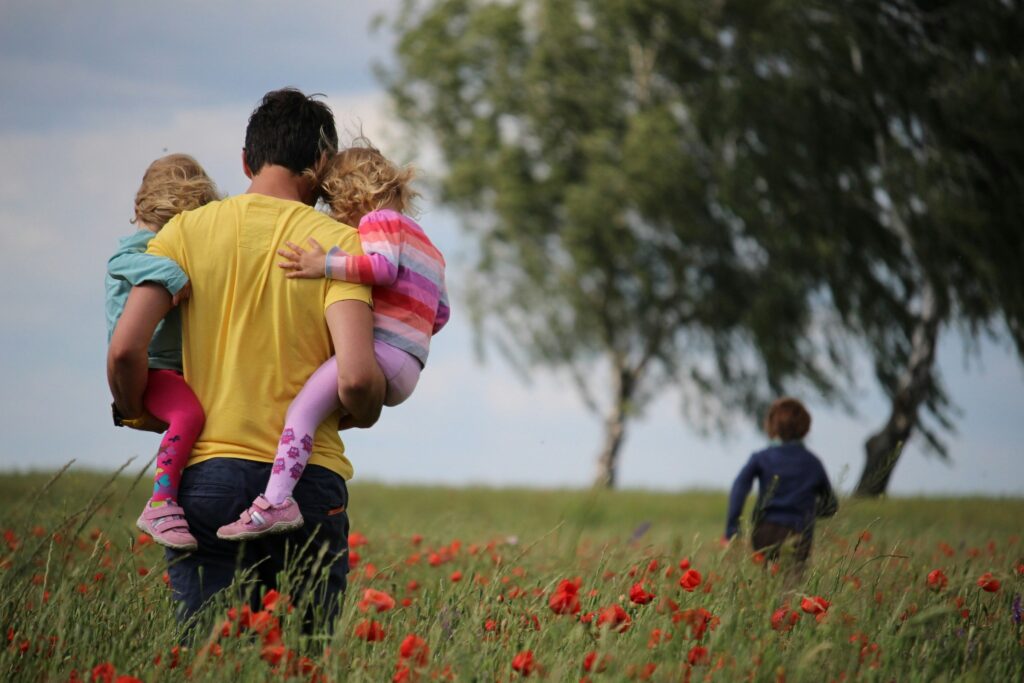
Photo by Juliane Liebermann on Unsplash
Jupiter, father to countless goddesses, gods, demigods, heroes, and everything in between, once in twelve years exalts on his throne in Cancer. For a while, I wondered why Jupiter is exalted (expresses himself the strongest) in Cancer? Why not in royal Leo? I was aware of one explanation: Jupiter, aka Zeus, through the concept of “Zeus Hospitality” or Xenia, was the god of strangers and travelers (ruler of Sagittarius), who protects guests and hosts and enforces strict rules of generosity. But was there another reason the father of gods is exalted in Cancer, the sign of home and family? The answer came not from an astrology book but from an article detailing new research into fatherhood, which finally made me understand why Jupiter is exalted in Cancer.
As I mentioned in my book, Metamorphosis in Motion – The Astrology of 2026, Jupiter’s transit in Cancer (June 2025 – June 2026), brings expansion and opportunities in the spheres of home, family, ancestral karma, compassion, forgiveness, and security. While it is true that the Moon (motherhood) rules Cancer, a closer look at the meaning of the sign reveals that all the aspects of life governed by Cancer could be grouped under the auspices of parenting (the vehicle) and unconditional love (the essence).
For years, I was biased. Since Cancer is a feminine sign, I kept referring to the zodiacal archetype as “the Mother.” While our mother provides us the safe womb (Cancer), and the breasts (Cancer) that nourish and fortify our immune system, what about the dad?
While I was on the stairmaster in the gym today, climbing 170 floors of a building that doesn’t exist, I read an article by Haaretz (highly recommended – best Israeli media outlet), about fatherhood and evolution, which I summarize below, along with a few astrological insights.
Prologue – Standing Up and Seeing the Sky
I find human evolution fascinating in the same way that I love hearing people’s childhood stories. The fact that we share genetic material with Neanderthals, and that 98% of our genes are identical to Bonobos and Chimpanzees, reveals a great deal about our human nature.
Homo-Erectus, an archaic human from whom we evolved, was an intriguing fellow. Walking on two (as in erect), he could easily gaze at the open skies, unlike mammals that walk on four. Homo-Erectus could see the stars, which might have opened his mind to the presence of higher forces. Probably that is when imagination came to be, and it desperately needed bigger hardware and faster processors.
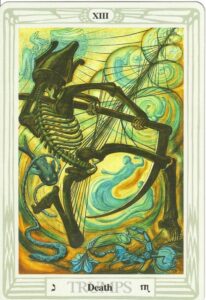
Around 1.8 million years ago, the Homo-Erectus brain made a major leap, growing by about 50%. That growth created a paradox – death and life were locked in a deadly balancing act. While the baby’s head kept growing, the mother’s birth canal remained the same size. Birthing often resulted in the mother, the newborn, or both dying. Mother Nature, as well as early women, had to find a solution. Sex can lead to death; that could explain why the Tarot card of Scorpio, the sign of sexuality, is Death and why the French still assert that sex is La “petite mort”.
Females (earthly and divine) came up with a clever solution. An empirically oriented, proto-scientific Homo-Erectus discovered a correlation between her body and a heavenly satellite. She linked her menstrual cycles with those of the Moon, allowing herself and anyone smart enough to listen to her to plan when it was safe to have sex with her caveman. In fact, I would argue that she was the original astrologer (and scientist) and deserves a monument or two around the globe.
In the meantime, another mom – Mother Nature – induced fetuses to premature birth, pushing them out of their mama’s womb before their brains fully matured. That allowed the baby’s large head to fit through the pelvis, resulting in a uniquely human trade-off: our infants began arriving unusually helpless, but their brains (hardware) continued to develop after birth. A clever packaging fix.

And Now The Article
For more than a million years, mothers weren’t alone. They were supported by what the article calls the “female tribe,” sisters, aunts, grandmothers, and close female allies (think Red Tent scenario). But then came a second leap, around 500,000 years ago, in the Middle Pleistocene (Ice Age), brain size suddenly expanded again to roughly its modern size. Babies were born even less mature, and kin support alone was no longer enough.
Enter Dad.
Dr. Anna Machin, an evolutionary anthropologist, places a behavioral turning point in human evolution at that time. Men began pairing with one woman and staying with her and the children. In her framing, this is the rise of the first distinctly human father, not merely a genetic contributor but a long-term caregiver. Machin argues this shift was critical: without sustained paternal involvement, raising slow-developing, big-brained infants may have been too costly for human survival. Father enters the realm of compassion, and parenting is created, fulfilling Cancer’s need for family, not only mothering.
Across many species, large differences in size between males and females tend to correlate with intense male competition and unequal parental investment. In other words, the father hasn’t the faintest idea who his kids are. In chimpanzees, males are much larger than females. In humans, the size gap is relatively small, about 15%, and the article says it shrank sharply around 500,000 years ago, consistent with a shift toward more shared investment.
This made me ponder. First came the archetype of Motherhood, and out of it, between 1.8 – 1/2 a million years ago, emerged, like a newborn, the Fatherhood archetype. To balance the fact that all fathers, biologically and mythologically, had a mother, estrogen, the female hormone, is mostly produced out of testosterone, the male hormone. I find it a quirky Yin-Yang balance – a signpost to the Way.
Taking an Article Detour
Let’s take a break and move on to a different article (I read on the way to the top of another skyscraper that doesn’t exist), a study published in Current Anthropology (Cieri et al., 2014), suggests that the explosion of human creativity and cultural exchange approximately 50,000 years ago was driven by a biological shift toward lower testosterone levels. By analyzing over 1,400 ancient and modern skulls, researcher Robert Cieri and his team found that human faces became noticeably “feminized, “exhibiting reduced brow ridges and shorter upper faces, at the same time that art and advanced tools became widespread. This physical transformation indicates a decline in androgen activity, which the authors argue fostered a more cooperative, less aggressive temperament. Human society moved away from “alpha” dominance and toward “survival of the friendliest.” What gave birth to us, Homo sapiens, was the reduction of machismo.
Recent research indicates a significant global decline in male testosterone levels that spans age groups, with a population-level drop of roughly 1% per year since the late 1980s. A man in his 60s in the 1980s had a higher level of testosterone than an average man in his 20s today. I wonder if we are not about to undergo yet another leap in evolution. Perhaps one that would render us more compatible with Artificial Intelligence.
Let’s return to the father; research shows a powerful and consistent negative correlation between testosterone levels and fatherhood. To put it bluntly, high-testosterone dudes make for lousy dads. They are too busy making noise and spreading their genes all over the place. They can’t be bothered to change diapers and tell stories. In fact, modern science suggests that human males are “biologically wired” to experience a hormonal shift that prepares them for fatherhood. So this little detour was to show that the creation of the “Father” archetype helped us evolve into our humanity; we are no longer an erect man, but a thinking one, and on occasion, loving too.
Involved Fathering
The article argues that today’s visible rise in involved fathering, as in guys like my father, who wash dishes, cook, nurture, play, did not create fatherhood; it’s not a Woke fad or a feminist influence. Fatherhood evolved slowly and surely over hundreds of thousands of years. It is natural. It is the Way.
Dr. Anna Machin argues that science has had a huge blind spot: for decades, researchers studied “absent fathers” far more than the majority of fathers who stay, bond, and invest in their families. The article reports that about one in ten fathers experiences postpartum depression, compared with about one in eight mothers. It says fathers’ symptoms often look different, with higher anxiety, anger, and self-directed aggression tied to feelings of incompetence. It also cites a recent study claiming fathers are seven times more likely than mothers to attempt suicide during the first 1,000 days after birth, worldwide. Fathers protect, true, but they, too, need protection.
Machin argues that screening and diagnostic tools are still built mainly around mothers, and that paternity leave reduces depression by accelerating bonding and competence. Her first study followed 15 men from the seventh month of their partners’ pregnancies through six months after birth and included hormonal testing, asking basic questions the field had barely measured: do fathers change biologically, what happens to their physical and psychological health, and how does a father form a real attachment with a newborn?
Machin describes two conclusions. First, fatherhood is activated through interaction: men’s shift into caregiving depends heavily on early, hands-on involvement, which is why “social fathers” (godparents, uncles, coaches), in many cultures, can be deeply influential. Second, the early window matters: she stresses the first 1,000 days as a critical period for brain development and warns that fathers often underestimate how important they are at the start, especially when the mother is breastfeeding. She also emphasizes paternal mental health as a neglected public-health issue, pointing out that fathers can experience postpartum depression and are rarely screened or assessed with tools designed for them. She argues that paternity leave can reduce depression by giving men time to develop competence and bond early.
Professor Ruth Feldman of Reichman University, whose work spans about 30 years, challenges the stereotype that mothers are naturally more bonded than fathers. After a few weeks of active fathering, men can reach similar oxytocin levels to mothers, despite not being pregnant or giving birth. Brain activity patterns related to caregiving also show striking similarities.
There is, however, one difference Feldman emphasizes, and it matters in everyday life. Mothers have a built-in biological ignition system through pregnancy and birth. Fathers’ caregiving biology is activated mainly through behavior. Caregiving itself is what turns on the caregiving brain. The more time fathers spend caring alone, and the more varied the activities, night waking, diapers, baths, and play, the stronger the parental network becomes.
Professor Ruth Feldman also describes two styles of parent–infant synchrony that infants need:
- Tuning toward emotional safety and nonverbal signals.
- Outward activities such as exploration, and learning.
A little astro insight, if you allow me, Cancer is a mute sign, as in, keeps quiet and practices nonverbality (especially if the kids are sleeping next door), as well as emotional (cardinal water sign) and associated with security and safety. In her work, she reports that the level of synchrony can be similar in mothers and fathers, but the quality differs. She also stresses these patterns are not fixed by gender. When the father is the primary caregiver, the patterns can flip. The point is that infants need both rhythms, safety, and exploration, no matter who provides them.
Her long-term tracking suggests that children who formed a close bond with their father showed stronger emotional and social development over time. The article describes better peer conflict skills in preschool, stronger emotion regulation through childhood, closer friendships in adolescence, and better stress management and sense of meaning as young adults. Families with two fathers have become more visible, and studies find their children rank in the highest developmental percentiles, with strong emotional-behavioral outcomes, high well-being, and a supportive, egalitarian family climate. It doesn’t suggest mothers are not needed; there is no argument there. It does reinforce the importance of fatherhood.
The article reframes the usual question about families without a father in the home. Instead of treating it as a simple absence, it asks about the size of the caregiving village. In single-parent families, outcomes can resemble two-parent families when grandparents, uncles, godfathers, or close friends are meaningfully involved. Without support, stress rises, and stress can interfere with the biology of attachment. Attachments are also associated with the sign Cancer.
Thoth – Father Wisdom and His Monkeys
The article goes all Thoth on us, summoning anthropologist Eduardo Fernandez-Duque of Yale, who has studied owl monkeys and titi monkeys for 30 years – a Saturn Return. In owl monkeys, aka night monkeys, his team genetically tested 125 offspring and found zero cases where the caregiving father was not the genetic father. Which means, they were scientifically cleared of any adulterous acts. Fathers in these species are described as the primary caregivers after the first week, carrying and grooming more than mothers, with infants returning to mothers mainly for nursing. His explanation is that extremely high paternity certainty makes paternal investment evolutionarily rational.
Finally, the article ties fatherhood to history and power. It notes that prehistoric figurines depicting humans are overwhelmingly female, with “Venus figurines” spanning roughly 300,000 years (emergence of Homo sapiens) to 8,000 years ago, while male equivalents are rare. But once writing appears, fatherhood becomes a legal obsession. The article cites Hammurabi’s Code from Babylon around 1750 BCE (the last time Saturn and Neptune cojoined as they are in 2026), 𒄩𒄠𒈬𒊏𒁉noting that roughly one-third of its laws address family relations and establish sweeping paternal authority, with harsh punishments for challenging it.
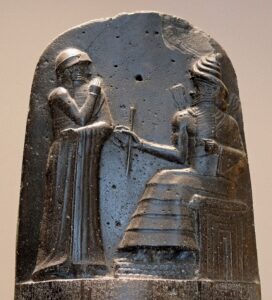
Historian Augustine Sedgewick argues that over 5,000 years, fatherhood became one of the West’s central templates for authority in law, religion, and governance, blending love and power in ways that can legitimize control. I would add that the story of a Father sacrificing his son was an inciting incident for the Abrahamic religions, and taken to the next level by Christianity – the story of God, as a Father, sacrificing his son.
Final Notes
Fatherhood is an archetype that evolved out of Motherhood, an offshoot or a branch splitting off the family tree. It went through its trials and errors, devolved, evolved, went back, but corrected itself. Through evolution, the all-father archetype discovered a way to nurture his infant other than breastmilk.
In astrology, the chest, breast, and ribs are organs associated with Cancer – the parent, the protector, and the provider. Protecting who? Leo, the sign that follows Cancer, whose organ is the heart, and is protected by Cancer’s ribs. Leo is the child, the one who transforms the couple into a family. Your Trinity – in the name of the Mother, Father, and you.
The first part of 2026 is blessed with Jupiter exalted in Cancer, and as the zodiac’s teacher, he can make these familial lessons taste like sweet water from the fountain of youth. Cancer in astrology represents immovable things – like land, or homes, and also families. You cannot divorce your parents or cast away your genes. They are there to be accepted, forgiven, and loved unconditionally, at least in an autopican archetypal sense.
I am eager to see how the archetype of fatherhood evolves; perhaps it would absorb more of Cancer’s compassion. But one could argue that, after this journey, the zodiac sign Cancer is the sign of parenting in addition to motherhood.
May your ancestral gifts shine through your genes (Cancer), bring you security (Cancer), and a feeling (Cancer) of home (Cancer).
gahl
Perfect insight Gahl, once again, thank you..!